
How Much Pocket Money Should I Give My Child?
Jul 23, 2026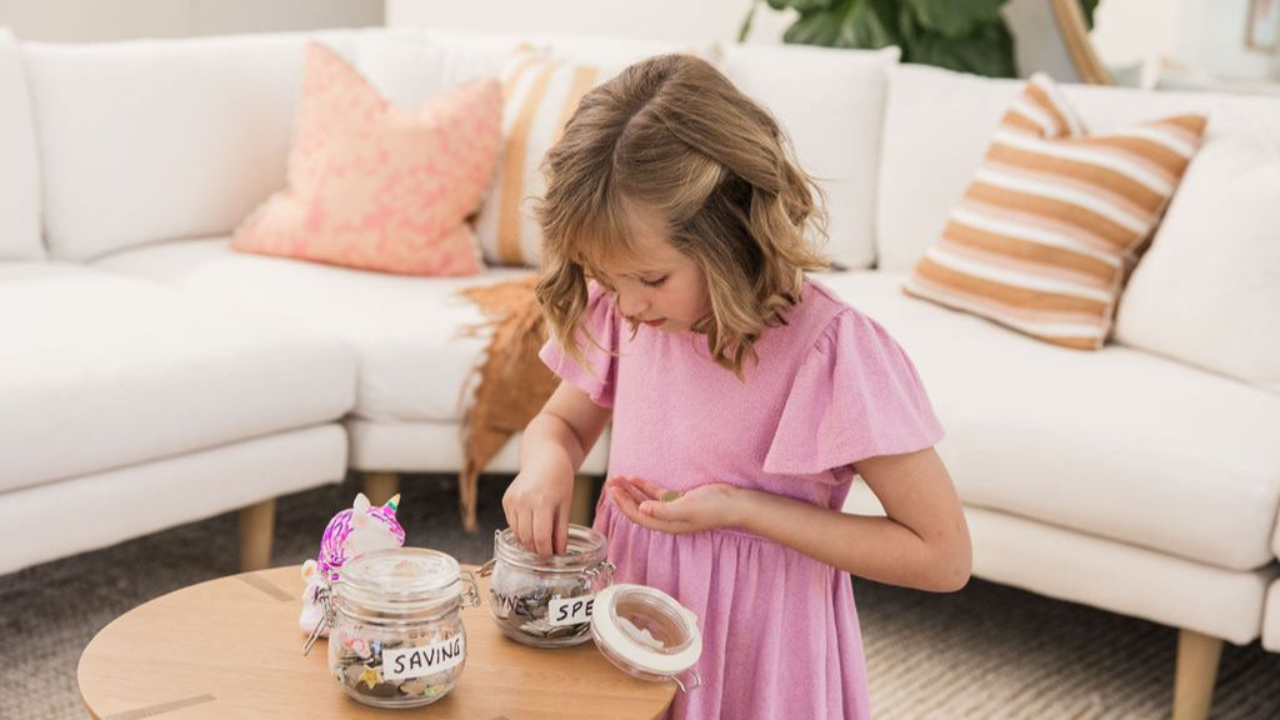
The most common question I hear from parents is a version of this: “I know I should start pocket money, but I have no idea how much to actually give them.” If that’s you, this is your starting point.
Most parents overthink the amount and under-do the system around it. Here’s a clear age-by-age guide, plus what I actually run with my own two girls (they’re 6 and 8, and they’ve been on pocket money since age 3).
The rule of thumb (and its limits)
The most widely used starting point is $1 per week for every year of age. A 6-year-old gets $6. A 10-year-old gets $10.
Simple, easy to remember, no negotiation (hence my girls get $1 for every year of age (I'm a working mum with little time and even less brain space lol). But it’s not the whole picture. The right amount depends less on age than on what the money is meant to do and what the parents think is right for their kids.
An age-by-age guide for 3 to 10 year olds (if not wanting the $1 for each year of age)
Ages 3–4: Start small. Coins are enough. My girls started with $3 a week in coins, dropped into a jar. The ritual matters more than the amount. In fact, when my youngest was one, she received 2 x 10c coins so she could participate with her 3-year old sister. At this point, it wasn't about the amount.
Ages 5–6: $3 to $5 a week. Enough to make a real choice at the shops. The lessons start landing here.
Ages 7–8: $5 to $8 a week. Cambridge research shows core money habits are set by age 7. What they practise now still runs twenty years from now.
Ages 9–10: $8 to $10 a week. Bigger decisions. Saving for something significant. Splitting between spending and saving.
What the amount is actually teaching
Small money moments build lifelong habits. Every week your child gets pocket money, they practise three things: making a choice, living with the consequence, and trying again next week with a bit more information.
If they never get money to practise on, they never build the muscle. If they get too much, the practice doesn’t feel real. The amount is the vehicle. The practice is the point.
The bigger frame
Handing over coins is the easy part. What most parents get stuck on is the system around it: what to say, when to say nothing, how to build real weekly practice without turning it into a lecture.
That’s exactly what I’ve built into Pocket Money That Actually Works. Ten short lessons covering strategy, how to build your system, how much, what to say at what point, and lots more.