
When to Start Teaching Kids About Money (Earlier Than You Think)
Sep 03, 2026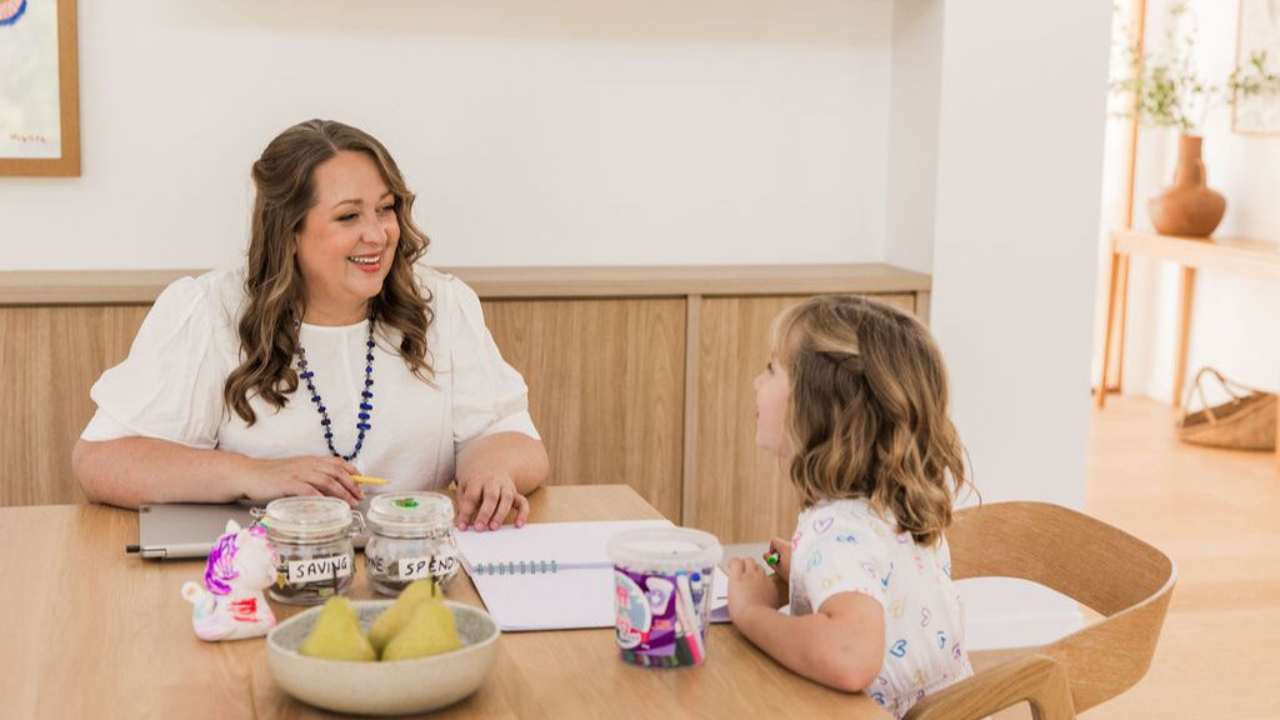
Almost every parent I speak to underestimates when to start. The most common thought I hear is “they’re too young, we’ve got time.” The research says the opposite. And after five years of running this with my own girls from age three, so does my own experience.
What the research says
Cambridge University’s long-running study found children’s core money habits are formed by around age 7.
Not their money knowledge. Their money habits. The unconscious defaults that will run their financial life for decades.
Which means the years between three and seven aren’t the “too early” zone. They’re the most important window you’ll ever have.
What starting actually looks like at each age
Most parents picture “teaching kids about money” as a sit-down lesson. It isn’t.
Age 3–4: Give them coins. Let them handle real money. Drop it in a jar. Hand it to the person at the shop. That’s the whole lesson. Money exists. It has a purpose.
Age 5–6: Add a real choice and introduce saving toward a goal. “You’ve got $2. What are you going to do with it?” Let them pick. Let them live with the outcome.
Age 7–8: Introduce saving toward a bigger goal. Use a jar with a picture of what they’re saving for. Basic wants versus needs at the shops. Start conversations about how money grows.
Age 9–10: More autonomy. Bigger amounts. More decisions.
Notice what’s missing at every age: lectures, whiteboards, formal lessons. Small money moments build lifelong habits.
When I started my own kids
I started both my girls on pocket money at age three. They’re six and eight now, and money is a normal, everyday topic in our house. The girls are regularly managing their money, whether it be saving or spending. We use the same system I teach: Pocket Money That Actually Works.
My own first pocket money was 20 cents a week. Mum can’t even remember giving us that little. But those coins were the start of something that shaped the rest of my life in a great way.
Three things to do this week
- Introduce one small money conversation. At the shops, in the car, at dinner. Just once.
- Give them $2 in coins. Let them decide. Say nothing about the outcome.
- Ask one question later: “What are you saving for?” My eldest, at three, said “a house.”
That’s your starting week.
The bigger frame
The parents who don’t have big awkward money talks with their teenagers are the ones who never let those conversations get big and awkward in the first place. They started small. They kept going.
That’s what Pocket Money That Actually Works gives you. A complete framework of small weekly practices for kids 3 to 10. Three is not too early. Ten is not too late. The important part is that you start and continue building on it.